
This post may contain affiliate links. Please read our disclosure policy.
You can end sibling rivalry and help your children become lifelong friends. Sibling Rivalry is the competition, fighting, animosity, or jealousy between siblings. Sibling rivalry is more than just bickering; it can cause stress for everyone involved. The sound of kids fighting or arguing is one that has concerned parents forever. Parents often wonder how to stop kids from fighting and help kids get along or become friends. Fortunately, there are solutions for parents to help your kids stop fighting and start getting along and becoming friends — it’s a win-win.
Quick Tips to Stop Sibling Rivalry
All of these tips (and more) to end sibling rivalry are explained in detail throughout this post today.
- Spend one-on-one time with each child.
- Create space for individual downtime.
- Establish clear family rules.
- Teach empathy through role modeling.
- Remember the rules of “things” over “people”
When you are armed with knowledge and a strategy, you can solve just about any problem, including fighting kids.
It’s great when you hear laughter from the other room as the kids play. However, almost any parent would agree that when there is laughter and playing, no matter how nicely they may be playing at the moment, the chances are that the arguments or tears aren’t far behind.
While some siblings get along well and others do not as well, the truth is that sibling rivalry is probably going to happen at one point or another, which is why I’m sharing today’s sibling rivalry tips for parents.
Today, I will share ten ideas that have been proven to work. One of them will surely work for you if you are consistent. 🙂
Update: This was first published years ago, but I think that a close sibling relationship is so important, so I’m resharing it today. As a child development therapist, former teacher, and mom of four children, I’ve dealt with my fair share of sibling rivalry over the past 20+ years. Every family I worked with has asked for advice about how to end sibling rivalry at one point or another, so if you feel alone or unsure of what to do now, don’t worry. We will get to the bottom of it with today sibling rivalry tips for parents. Just follow these tips & you will end sibling rivalry in your home.
I’ve experienced sibling rivalry from both sides—first as a child and later as a mother. Growing up, my brother and I had our share of conflicts, but now we’re both adults with children of our own who aren’t just cousins but the best of friends. As for my husband and I, we have four children (ages 18, 16, 14, and 12) who have grown into not only siblings but best friends. They get along well, don’t argue, and they really like hanging out together. They often make plans together (with or without other friends.)

Sibling Rivalry is Not New.
Sibling Rivalry is an age-old problem that parents have been facing forever. When children are around each other so much, it is common to argue a bit. I once heard that we feel safe enough to argue with those we love because we know they love us unconditionally. Perhaps that is the case with siblings? 😉
“Fighting kids” is a complaint that parents have been discussing since the beginning of time, I’m sure. We all want our children to be kind to each other. In fact, they even invented National Siblings Day to celebrate siblings and their friendship! A sibling bond is a special kind of bond. It’s one that I hold dear to my heart, and I expect my children to do the same, even if it takes them their whole childhood to understand.
Why Do Siblings Argue? Specific Reasons:
To end sibling rivalry, we have to undersatnd where they begin. There are many reasons that siblings fight or argue:
- Boredom – are your kids staying busy? Doing age-appropriate chores? Playing outside? Spending time in screen-free play? Bored kids are often tired, frustrated, and looking for ways to stay busy (even if it means arguing.)
- Looking for attention from you – One child may feel that they are getting less attention from you, but you can take care of this rather quickly and easily with sibling jealousy solutions like giving each child 20 minutes of one-on-one time.
- Birth Order (the older child might feel as if they should be in charge of picking the game, toy, etc… or the younger child may feel that they should pick because they are younger. Oftentimes, when children are close in age, sibling rivalry is more exaggerated in the younger years.)
- Personality – one child may be easygoing, while one may be more set in his/her ways.
- They think it is acceptable. Be sure to explain the rules that hitting, yelling, biting, taking things, etc. is not acceptable and will not be tolerated. Instead, hold a family meeting to explain and teach them ways to resolve the conflict in a kinder way. Practice it and talk about it often. “We are kind to each other when we ask for something.”
- Stress in your child’s life (tests, school, friendship, etc.) Kids have stress just like adults have stress.
- Tired – if your child is tired, they are going to be grumpy and argumentative. Be sure that your child is going to bed on time & sleeping long enough.
- Good nutrition – just like good sleep habits, good nutrition has had huge links to a positive personality, less stress, happiness, etc.
Four Different Families. One Similar Problem: Sibling Rivalry.
Sibling Rivalry has been an issue since families began. While I can relate with our children, my parents & in-laws also remember stories of sibling rivalry in their houses growing up. Here are Real-Life Stories of Sibling Rivalry Across Generations
Peace in Our Family: My Mom’s Story:
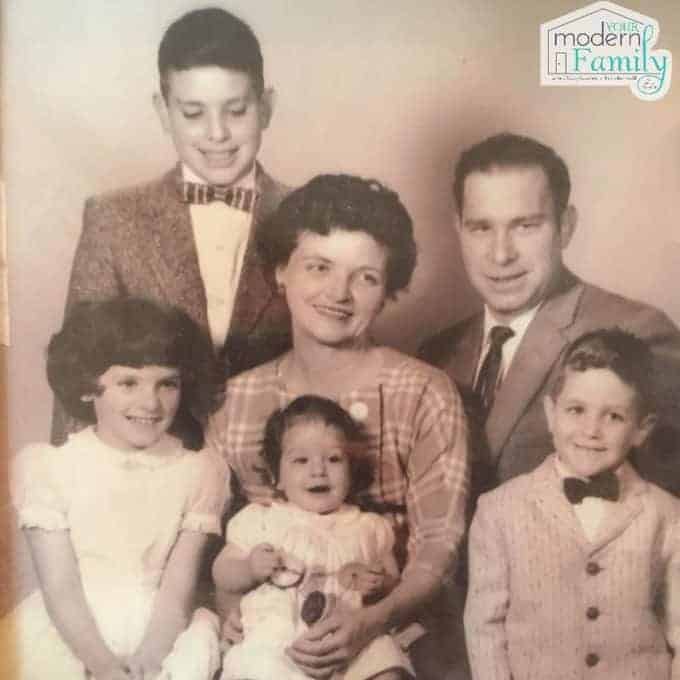
My grandma used to tell me about her kids, growing up in Pennsylvania, in the 60s (pictured below).
There were four children: my mom and her three siblings. They would fight & argue to the point that my grandma could remember telling them, often, “If we can’t have peace in our family, how can we expect to have peace in the world?”
The Three Stooges: The Story of my Dad’s Family:
On the other side of Pittsburgh, my Dad’s family was going through the same thing. My other grandma told me that she “had to turn off The Three Stooges” because my dad and his brother were constantly hitting each other with moves they saw on the show. It would easily turn from pretending into actual fighting.
How One Nickel Taught a Lesson About Fairness (My Father-in-law’s story):
Not far from there, in a small town outside of Pittsburgh, my husband’s dad was waving a newly-earned nickel in front of his sister, who didn’t get one.
As he waved it, he said, “I get to buy a popsicle and you don’t.” His mom walked right up behind him and took the nickel off of him. He did not get a popsicle that day.
Sibling Rivalry in the 1960s: My mother-in-law’s Story:
Just twenty miles from there, my husband’s mom (a middle daughter) always tried to follow the rules, which bothered her older & younger sister. On one particular day, my mother-in-law had just finished washing and drying the dishes after dinner.
As she was getting ready to put them away, her parents left the room, leaving just enough time for her older sister to dump dirty water back on all of the clean dishes and blame it on my mother-in-law.
Is Sibling Rivalry Normal? YES!
Parents have been asking kids to stop fighting since the beginning of time. The good news is that persistence pays off.

It’s natural to want our kids to be best friends. We want them to have a life of happiness together, counting on each other, and relying on each other.
“Sisters and brothers are the truest, purest forms of love, family, and friendship, knowing when to hold you and when to challenge you, but always being a part of you.” –Eastman
Personally, I want to know that when times get tough (now, in a few years, and when they are adults), they will call each other and know that they will have the support of their family and siblings who have become their friends.♥

Younger Children Argue More
Yes. Studies show that “Little Kids Fighting Happens A Lot – In children ages 7 and under, the number of arguments is 3-7 every hour.”
It’s one of the most common child behaviors that happen during these young developmental stages, but just because it’s common doesn’t mean we have to ignore it or deal with it. Parents want a solution!
Why Do Siblings Fight? Are There Benefits?
The good news is that sibling rivalry, while bothersome at the moment, often helps children learn how to negotiate, learn problem-solving skills, conflict resolution, and understand others?
The bad news is that it brings negative attention to your child and can ruin many fun family activities (or even an ordinary day.)
WHY they are fighting. There are many reasons and it’s up to us to figure them out. Pay Attention to what is going on when the fighting starts:
The National Center of Biotechnology Information suggests: “Most research on direct sibling influences is grounded in developmental or social learning models, suggesting that, by virtue of their everyday involvement, siblings can promote positive development as well as adjustment problems.”
“Siblings offer early, on-the-job training in how to work and live with other people. They also provide a crash course in how to manage intense emotions: envy, hatred, anger.
In children of all ages, but especially younger children, the urge to compete for parental attention is innate. Among teenagers, sibling conflict helps them work out their need to differentiate from family and to set their own boundaries.” – New York Times
How Long Does Sibling Rivalry Last?
Sibling rivalry often begins in early childhood, with kids competing for your attention, toys, or space.
Research shows siblings spend about 50% of their free time together, learning how to interact—positively or not.
While rivalry usually decreases as kids grow, it can resurface during challenging sibling rivalry stages, like adolescence or major life changes. So, when does sibling rivalry end? With consistent guidance, most siblings outgrow it and develop stronger bonds over time.
Can Sibling Rivalry Affect Adult Relationships?
Yes, but it doesn’t have to. The impact of sibling rivalry on adult relationships can vary, but teaching kids to work through disagreements and practice kindness early on helps prevent negative outcomes.
By fostering respect and empathy when they are children living in your home (with your guidance), you’re building a foundation for a lifelong bond rooted in love and mutual support.

Timeline: How Quickly Can You End Sibling Rivalry?
If you folllow the suggestions provided in the next section, “HOW TO STOP SIBLING RIVALRY,” you will see results quickly. Here is a sample timeline of what you can expect, if you are consistant with following those suggestions:
- Week 1-2: Small improvements as kids adjust to new strategies, rules, and empathy training. Expect some resistance.
- Week 3-4: Noticeable changes with fewer arguments and better problem-solving.
- Month 2-3: Major reduction in rivalry as kids feel more secure and cooperative. Occasional disagreements resolve quickly.
- Month 4-6: Rivalry becomes rare, and siblings form a stronger bond with mutual support and kindness.
Key Tip: Consistency is crucial if you want to stop and end sibling rivalry for good. With daily effort, expect significant improvement in 2-3 months and a supportive sibling relationship within 6 months.

HOW DO YOU STOP SIBLING RIVALRY?
We want the fighting to stop, right? As parents, helping siblings get along is at the top of our lists. We want our kids to be not only family members, but also friends. We want them to enjoy hanging out together without tattling to us about the other ones. All of these things are possible.
It’s important to teach them them to have each other’s backs, to support each other, to value one another.
As Ortega said, “To the outside world, we all grow old. But not to brothers and sisters. We know each other as we always were. We know each other’s hearts. We share private family jokes. We remember family feuds and secrets, family griefs, and joys. We live outside a touch of time.”
1). Teach Empathy
I read a book called Siblings without Rivalry and it was great. It talks about how most rivalry stems from needing attention.
When one child says “Mom, so & so took my pencil.” Instead of saying our natural reaction ‘Stop being a tattletale.” Or “Give it back.” the book explains that we need to just be empathic.
“Oh, he took your pencil? That probably hurt your feelings.” They just want to feel valued. That was all that it took for me to see a huge turnaround in our kids.
It works. It really does. Just relate to them, listen to them, and be empathetic. They will handle the rest themselves.
2). Show Equality (“He said/She said”)
Since most of the arguments happen when I’m not right there, I end up being the judge. The problem is that I can’t pick when it is based on “he said/she said”, so I have to go off of who I think is right. I do not like to do this… at all.
If I don’t have all of the facts, they are treated equally. Usually, it ends in everyone facing the consequences (which is usually doing a boring & hard chore that they dislike.)
3). People Over Things
We always choose “People over things.” So if were ever fighting over something, we just take it away. I have always told our kids, “If you are arguing over something, I will take it. Nothing will come in-between your relationship. That is more important than any thing.”
Then, I do what I said— I take the object in question away and I do not give it back until the following day. They no longer recieve any warnings before I take it (I used to give out warnings, but now they know the rules). If I hear fighting, it is gone/turned off/taken away and I ALWAYS remind them why: “We don’t let anything come between family.”
4). Take Away Electronics
Take away electronics. It works like a charm! Seriously- just read this post on no electronics for the week to hear more. I can’t tell you enough about why I love this week, but I will say that the kids like it just as much. Yes, the beginning of the week is hard, but by the end, they are playing and happy, and not one child is asking for their electronics.
NOTE: I do allow family TV shows and movies- as long as they are sharing the experience with someone else (like watching a Netflix series at night together), I am OK with it.
OLDER CHILDREN TIP: Older children rely on electronics for communication, so I would suggest allowing them to use their phones, in open areas like the living room or kitchen, to text friends a few times a day.
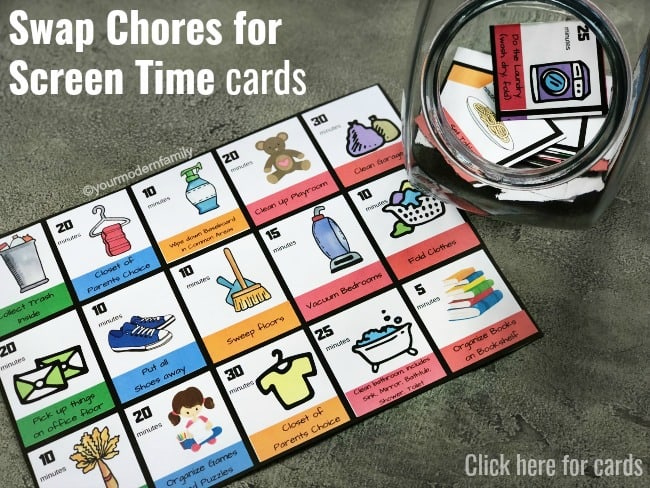
When we did give them back, we immediately started using our Chores for Screentime Cards.
2025 UPDATE for Our Electronic Usage: Now that our own children are older, I have a rule that I implement often. I don’t like when our kids hang out alone on electronics. So, I often tell them that if they play video games (XBox, PC, computer, phone, etc.) today, they have to play a game together. I don’t like when they are on electronics too often, so this is a perfect solution. If they want to play today, they have to play with family. With four kids (and two cousins their age), this is easy to do— someone is always willing to play, if invited.
For example, if they want to play Fortnite, they play on teams together. If they have to be in different rooms (to play on seperate devices), they just Facetime eachother. They usually Facetime their cousins to join in, too.
This way they can still use their electronics for a little bit, but they are doing it together so they are enjoying each other’s company, finding new things to talk about, and they are working together as a team.
5). Use “Put-Ups”
If a sibling puts a sibling down, they have to offer a compliment or a way to build that person up. A good ratio is 1:3. If you put someone down once, you must say three things that are encouraging and kind to build them back up.
Example:
Child A says: “You are so annoying.” to Child B.
Child B is sad. The parent overhears it and reminds Child A to offer three “put-ups” or kind words.
Child A: “You are fun to play with on the basketball court. You are good at sharing your toys. I like how you work hard at baseball practice.”
It can be hard for them to think of new compliments and not always go back to the generic ones like “You are nice,” but they will get the hang of it.
Just follow up to make sure this happens. It will become a habit in a few weeks.
Tip: Another way of offering compliments & kind thoughts is through a kindness journal.
Over the past year, I gave each of our kids a “Kindness Journal” (just a small notebook). It is used as a way for their siblings to write something kind to that child.
(Example: “Ethan, you worked hard biking up that hill yesterday. Way to go!” It’s simple- they write one thought each day for one sibling. We rotate the books. It’s been wonderful!
6). Work It Out
Sometimes, the best thing that we can do is to teach our children to work it out. Give them the skills to resolve conflict and then let them do it. Yelling and phyical fighting is not OK, but letting them figure it out on their own before you jump in is important.
When our kids come to me with a tattle, I remind them that if they can’t work it out, I will be forced to take action, which means taking things away or giving everyone consequences.
NOTE: Remind them that they SHOULD “tattle” or come to you is if someone is being hurt. This is a “must-tell-mom” situation.
7). Time Together
As times continue to change, “Children are spending more and more time in age-segregated activities. Meanwhile, houses have gotten bigger. Although many kids still share a room (as mine do), increasing numbers of children sleep on their own. With less need to resolve conflict and less time available in which to do it, some disputes may fester longer than they need to.” – KJ Dell’Antonia
This is also why we do things like, “if you want to play on electronics, you have to play it together.” Or “If you want to go out to the park, you have to play together while we’re there.”
Encourage your children to spend time together. Don’t be too willing to exchange family time for other activities— family time is the most important.
8). Cotton Ball Reward System
Using our Reward System is a great way to encourage them to get along! If you have not read about our Cotton Ball Reward System, I would suggest trying it. It encourages our kids to do nice things for others. Focusing on the positive works!

9). Alone Time
Just as you finished reading about time together, I want to remind you that your children also need some space. Independent play or time to relax is important for your child (and for you). Offering alone time is a great way to let your children have time to reflect, be in a quiet environment, and miss each other a bit.
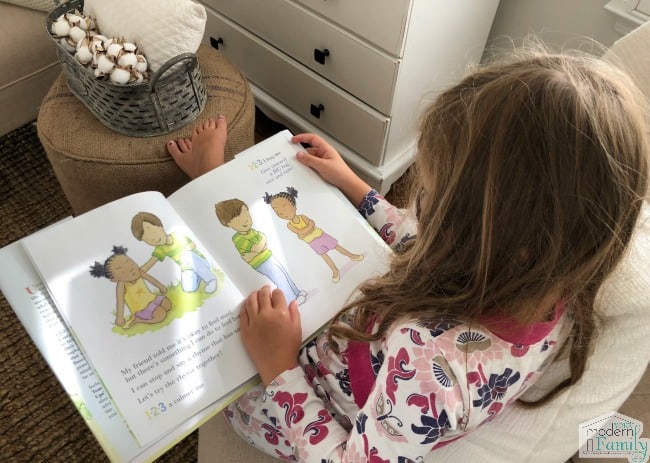
I can usually tell when they need time to themselves and this is when I give them a quiet activity, like reading or playing in their rooms. A 30-minute ‘daily reading’ time is a perfect break in the day for everyone to sit alone and just relax. If children are too young to read, drawing is a great outlet.
10). Speak Gratitude & Pray Outloud
It is so important for our kids to hear us being grateful. Every single day, when I pray with our kids, I tell God that I am thankful that they have one another. I am thankful that they have the love and friendship of a sibling — built-in best friends. Every single day, I say this out loud, in front of our children. “Thank you for giving ____ brothers and a sister because they will be best friends forever.”
I usually include their cousins in this prayer, too. Cousins, like siblings, make great friends and these six cousins are as close as siblings!♥
Bonus Idea to Stop Sibling Rivilary: Have Family Meetings When Needed
Update: I used to hold family meetings often when our children were younger. (I no longer need to, as our kids are older & get along well.) When I was a teacher, I found that including my students in decisions helped them to stay on track. I find the same thing to be true as a mother. I ask our kids for their input and they are more likely to follow it, stick to it, and remind me if they don’t.
Here are some things that a parent might ask the children during a family meeting.
- What should we do if a sibling feels left out?
- Why is it OK to disagree about something? Does someone have to be right?
- How can we solve arguments about toys without yelling?
- What can you guys play together?
- Let’s think of a project you can do together.
- Do you think ____ is fair? (Each child’s chores or different bedtimes) If the answer is no, listen to your children and come up with a solution during the meeting.
- How can we show kindness to each other this week?
- If you feel left out, what can you say to your brother/sister?
- Why do you think it’s important to ask if you can borrow something before taking it?
- Everyone tell me one nice thing that each of your brothers/sisters did this week?
- Cover any other topics that may have come up that week.
- Don’t be afraid to role-play. It really helps young children to understand & gives it more of a real-life feeling!

Children love to live up to our expectations & act like we say they act. Remember… our words become our child’s inner voice. If we focus on the positive, they will follow, rising to the occasion, proving what you said to be true, so let it be good.
“We didn’t realize we were making memories, we just knew we were having fun.” — Winnie The Pooh
Sibling rivalry is part of growing up, but with consistent strategies and empathy, your children can grow into lifelong friends. Start with one tip today, and watch your family transform.
MORE POSTS YOU MIGHT LIKE:



Remember, these ideas are not a substitute for professional counseling. If your children continue to argue or if the fighting becomes physical, you will want to seek professional help.










Great Idea!
Today my efforts in sibling relationship showed some positive results. The little one bit older child badly on her finger. She cried but she didn’t yell at her brother. Later when I asked her how did she feel and what did she think when he bit her, she said: “He is still little”.
When the little one starts talking well I might use that 3 put ups idea.
It seems to be working in our house. 🙂 good luck!
Great tips- thanks!!
thanks. 😉
Thanks for all these helpful tips.
x
Summer
My sister-in-law’s family is military, so they move often. She reminds her kids that friends come and go, but you just have to get along with your siblings because they are forever.
good advice!
Great tips. Thanks for linking up to Sweet and Savoury Sunday, stop by and link up again. Have a great day!!
Thanks for these great tips.
I love the put ups for put down idea!
Thank you for stopping by the Thoughtful Spot Weekly Blog Hop this week. We hope to see you drop by our neck of the woods next week!
Some great ideas here. I totally agree on taking away the electronics. We have a rule – we don’t cry over electronics! So if someone is crying over a phone or a video game, it’s off.
Pinning. Thanks for linking up at Wordy Wednesday!
Thanks for the article! We already do the pompom jar, and it does work….. Our two boys are always playing together / fighting and I would love to see the fighting reside some!
Good luck. That book is seriously awesome (the one I mentioned in the article). I was reluctant to get it, but it was great.
I love #1. I learned the beauty of validating feelings a little too late for my own, but use it when interacting with children I meet. I have a picturebook about a big sister that teaches her little sister to share and learns patience along the way. It’s called SHE YELLED. I SCREAMED…SHE PULLED MY HAIR! It can add a positive bedtime message. In the end, sharing takes time and it’s never easy. http://Www.tracyleshay.com
Any help for dealing with this? Seems to always happen in the car where I can’t separate them: my 2 year old loves to scream just to hear her voice. The loud sound upsets my 4 year old. My 4 year old starts crying, asking her sister to stop, which, for some reason, makes my 2 year old scream more. How can I get my 2 year old to stop screaming or my 4 year old to calm down and not let her sister know it bothers her?